
EDAD 651 PRINCIPALSHIP AND SCHOOL IMPROVEMENT
Experience AIIAS,
Change Your World
EDAD 651 Principalship and School Improvement
About the Course
Everything rises and falls on leadership (Maxwell, 2007). That’s how important leadership is. When you are the principal, whether your school succeeds or fails largely depends on you. Do you want to be remembered as one who brought about positive changes in at least one school and made a difference? This class is designed to help you become just that kind of principal.
The study of leadership and its dynamics as it applies to the school administration of elementary and secondary, highlighting planning and implementing change for school improvement. The course explores the principal’s role in providing moral, relational, instructional, and administrative leadership within the context of a school’s culture and potential resources.
Who Needs This Course?
- Graduate students:
- MA Education
- PhD Education
- This course may also be taken by
- Teachers for continuing education
- Teachers as non-degree courses for professional development
- Graduate students from other schools can use transfer credit
Time Investment
For every 3-credit course, a student should count on at least 9 hours spent reading and reflecting, for discussion forums, application papers, projects, and other requirements. Instead of the face-to-face meeting, the three hours of the class meeting will be spent participating in online forum discussions. This means that students should plan on spending 6 hours a week.
Course Outcomes
Upon completion of this course, the students will be able to:
- Discuss the roles and responsibilities of a school principal.
- Analyze school leadership theories and describe how they impact schools in their own contexts.
- Assess the culture and climate of a school and effect change towards a safe and healthy learning community functioning as an integral part of society.
- Manage, develop, and align the resources available to a school to lead it towards fulfilling its mission and realizing a vision for school improvement.
- Manage the development of the curriculum and instructional effectiveness of a school.
- Value effective communication with the various stakeholders of the school community.
Topics to Cover
Week 1 – Perspectives in School Leadership
Week 2 – The Principal as a Spiritual Leader
Week 3 – The Principal as a Culture Builder
Week 4 – The Principal as a Curriculum and Instructional Leader
Week 5 – The Principal as a Resource Manager
Week 6 – The Principal as an Advocate of Professional Development
Week 7 – The Principal as a Communicator
Week 8 – The Principal as an Administrator
Week 9 – Final Examination
Facilitator
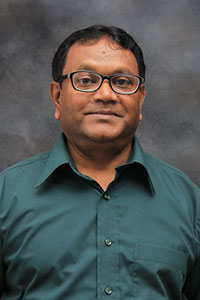
SAMUEL GAIKWAD, PhD
Dr. Samuel Gaikwad is a seasoned professor in the Education Department of the Graduate School at the Adventist International Institute of Advanced Studies (AIIAS). Originally from India, he has served in various capacities—as a teacher, consultant, and administrator—across multiple educational institutions. With a specialization in Curriculum and Instruction as well as Educational Administration, Dr. Gaikwad brings a wealth of experience to his role. He has been teaching research and statistics courses at AIIAS for several years, where he is known for his clarity, rigor, and dedication to academic excellence.
Developer
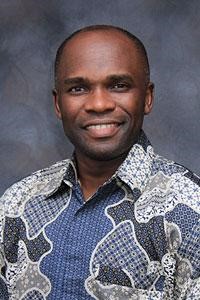
SAFARY WA-MBALEKA, PhD
Dr. Safary Wa-mbaleka is a scholar and academic leader in higher education and research. He served as Dean of Postgraduate Studies at the Adventist University of Africa from April 2021 to September 2022, supporting faculty and students in promoting quality education. During this time, he also served as Director of AUA Online and Associate Professor of Education, leading the university’s online division and teaching in the leadership program.
From August 2022 to July 2024, he was an Associate Professor at Bethel University, where he taught doctoral research courses and advised doctoral students in research methodology.
He currently serves full-time as Research and Evaluation Manager at the General Conference.